Article by Nadine Helmy
The first wave of Conceptual Art, spanning the 1960s to 1970s, introduced a paradigm shift that has irrevocably changed the art world since. This pioneering first generation of artists rejected the notion of creating ‘precious’ works of art that emphasized form and execution – and instead turned to dematerialization, stripping art away from visual distractions to convey their ideas. As a result, Conceptual Art became participatory in its nature, championing that the artwork finds its completion within the realm of the viewer’s imagination. Robert Barry famously stated that “art comes to life only within the observer’s imaginative space, within that subjective place that is our mind.” Art became merely allusive to its idea, dematerialized and minimalistic, allowing itself to transcend into individual mental realms through personal interpretation – valuing the viewer’s active contemplation above all.
The art of this decade was absolutely revolutionary. It was deconstructive in its nature, directly critical of the systems and institutions and above all, provocative. Land Art, a sub-movement of Conceptual Art, in its very manifestation using natural materials from the earth, served to reject the traditional gallery space and brought art right to the public. We saw a rise in the use of Readymades, a concept first introduced in 1917 by artist Marcel Duchamp that brought found objects into the gallery space for the first time – questioning the meaning of art right in the middle of its institution. Conceptual Art was here to serve the people, to change ideas or even provoke new ones.
In art history, works produced from 1970 onwards that build on the principles of 1960s Conceptual Art are categorized as Post-Conceptual Art or Neo-Conceptual Art. Instead of rejecting or ending Conceptual Art, Post-Conceptualism incorporates new developments while maintaining the focus on the concept—the idea—as the core aspect of the artwork.
Here are 4 artists from the Arab world you should know about:
Iman Issa, Egypt

Iman Issa’s work questions how objects with bestowed collective importance and relevance resonate subjectively within our minds, encouraging us to reflect on these objects that are considered relevant today.
In her Heritage Studies series, Issa carefully studies historical objects placed in museums and archaeological sites. Crafting sculptures based on her cognitive understanding of these artifacts, her creations turn out to be nothing close to their original form. Juxtaposed with a detailed text explaining her understanding of their original context, she asks the viewer, “what do these new elements share with their sources if it is not the material, color, appearance, or shape? […] They share a speech act.” By addressing or saying something similar, they somehow become the same. As text precedes form, she critically assesses the role of memory, language, and text for the human condition, linking past to present.

Iman Issa, Heritage Studies #10, 2015. Copper, aluminum, and vinyl, Solomon R. Guggenheim Museum, New York Guggenheim UBS MAP Purchase Fund, 2015.
Sarah Brahim, Saudi Arabia

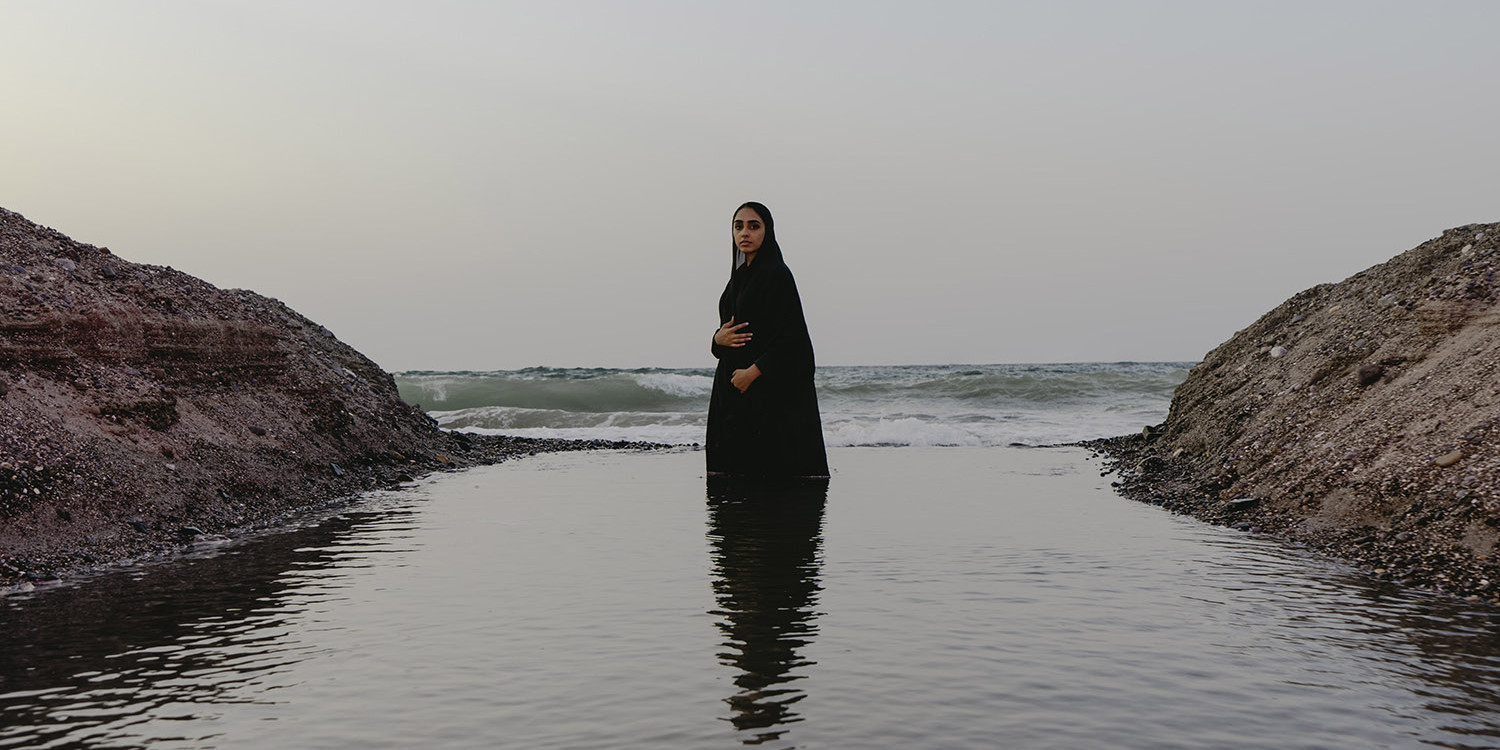
In “Flesh Memory,” Sarah Brahim unveils a profound yet often overlooked force of existence: breathing. Brahim’s work pays homage to algae’s critical role in generating approximately 70 percent of the Earth’s atmospheric oxygen. Her installation features sheets of algae biomaterial suspended above pools of water, gently swaying and folding in response to the breeze, evoking the rhythmic motions of breathing.
For several years, she studied the respiratory system. She explored it through textiles, film installations, and extensive textual research – fascinated by a universal aspect of life that remains largely unexplored. She views the act of breathing as an ancient, fundamental part of human movement and existence, that has the ability to foster empathy.

Sarah Brahim, Flesh Memory, 2023
“Flesh Memory” integrates completely with its surroundings, influenced by light, wind, water, and reflections. The act of breathing connects the viewer with the artwork, creating a fundamental link to the natural cycles that support all life. As the artwork naturally degrades, it symbolizes the ephemeral nature of existence and our deep connection to the cycles that sustain life. Albeit indirectly, the artwork also serves as a testament to Conceptual Art’s commitment to inviting visitors to interact with the works.

Sarah Brahim, Saudi Arabia. Flesh Memory (2023). Photo by Khushnum Bhandari / The National.
Yazan Khalili, Palestine

In “I, The Artwork” (2016), Khalili challenges museum protocols by presenting a null and void contract that specifies the artwork cannot be shown in a country occupying another land. Exploring the notion of art boycotting institutions that fail to meet its ethical standards, his project features a photograph of a contract, crafted with the help of a legal expert, that articulates the artwork’s refusal to be displayed, owned, or collected by certain institutions which indirectly play a role in the Israeli occupation of Palestine.

Yazan Khalili, I, The Artwork, 2016. Photographic print 120 x 79.2cm. Installation shot at Lawrie Shabibi gallery, Dubai, 2017. Yazan Khalili, in collaboration with Martin Heller. Commissioned by Riwaq Biennial, with support of Mophradat.
Despite its legal language, the contract is ineffective in a legal setting because the artwork itself cannot advocate for its terms; it relies on the artist to represent its intentions. This project examines the intersection of law and justice, demonstrating how legal systems can both include and exclude subjects based on their regulations. The work is ultimately a critique of the infrastructure of the art world, questioning whether an artwork can dictate its conditions of existence and exhibition.
Faisal Samra, Saudi Arabia

A Saudi artist born in Bahrain, Samra aims to create works with multiple layers of meaning, both immediate and philosophical, confronting political deception with stark reality. In his film ‘The Chair,’ he demolishes a chair, symbolizing the seat of governance. As regimes collapse, so does the concept of authority, leaving a void. This act of destruction represents the collapse of authority and the ensuing chaos. Through this work, Samra examines the aftermath of the 2003 invasion of Iraq, foreseeing a future of “Nothing”—a void left by fallen regimes and shattered governance.

Faisal Samra, CDR – The Chair II (2014). Video channel work. Courtesy Ayyam Gallery, Dubai.
When juxtaposed with historical Conceptual Art, contemporary conceptual works frequently adopt interdisciplinary approaches and encourage audience participation. There is a notable emphasis on institutional critique, political systems, and social hierarchies. Moreover, there is a growing awareness of environmental sustainability, alongside a resurgence of performative practices. Artists express a desire to articulate intangible connections to contemporary life, especially in a world grappling with an uncertain future.
Supported by Abdul Hameed Shoman Foundation
مقال نادين حلمي
ترجمة ليان الجقة
جلبت الموجة الأولى من “الفنّ المفاهيمي”، التي امتدّت من ستينيات إلى سبعينيات القرن الماضي، تحوّلاً جذرياً غيّر مجرى عالم الفنّ بشكل لا رجعة فيه، حيث عبّر الجيل الأول الرائد من الفنانين عن رفضهم فكرة إنشاء أعمال فنّية “قيّمة” تركّز على الشكل والتنفيذ، واتّجهوا بدلاً من ذلك إلى نزع الطابع المادّي عن الفنّ وتجريده من التشويشات البصرية لنقل أفكارهم. ونتيجةً لذلك، أصبح “الفنّ المفاهيمي” تفاعلياً بطبيعته ليؤكّد أن العمل الفنّي إنّما يجد اكتماله في خيال ناظره، كما في مقولة روبرت باري الشهيرة بأنّ “الفنّ ينبض بالحياة فقط في حيّز خيال المتفرّج، في ذلك المكان الذاتي الذي هو عقلنا“. وهكذا أصبح الفنّ مجرد إشارة إلى فكرته، بتجريد ومن دون بهرجة، متيحاً لنفسه الارتقاء إلى العوالم العقلية الفردية من خلال التفسير الشخصي، ليمنح القيمة العظمى للتأمّل النشط لدى المتفرّج
كان فنّ ذاك العقد من الزمان ثورياً بشكل مطلق. وكان تفكيكياً بطبيعته، ناقدًا مباشراً للأنظمة والمؤسسات، واستفزازياً فوق كل شيء. فقد استُخدِم “فنّ الأرض”، وهو حركة فرعية من “الفنّ المفاهيمي”، عبر تجلّياته باستخدام مواد طبيعية من الأرض، كوسيلة لرفض الفضاء التقليدي للمَعارض الفنّية وجلب الفنّ مباشرة إلى العامّة. كذلك شهدنا تزايد انتشار الفنّ “الجاهز” (Readymades)، وهو مفهوم قُدّم لأول مرة في عام 1917 من قبل الفنان مارسيل دوشامب عندما جلب لأوّل مرة أشياء عثر عليها إلى فضاء المعرض، ممّا طرح تساؤلات عن معنى الفنّ في قلب مؤسّسته
فأين هو الفنّ المفاهيمي اليوم في العالم العربيّ، وكيف يتطوّر؟ جمعنا في ما يلي قائمة بعدد من الفنانين المفاهيميين من العالم العربي ممّن يستحقّون التعريف بتجربتهم
إيمان عيسى، مصر
تطرح إيمان عيسى في أعمالها تساؤلات حول كيفية تردّد صدى الأشياء ذات الأهمية والجدوى الجماعية بشكل ذاتي في أذهاننا، وحثّها لنا على التأمّل في هذه الأشياء التي نوليها أهمية في يومنا هذا
في سلسلة أعمالها التي تحمل عنوان “دراسات تراثية”، تدرس عيسى بعناية القطع التاريخية الموضوعة في المتاحف والمواقع الأثرية. وعبر صنع منحوتات بناءً على فهمها الإدراكي لهذه القطع الأثرية، يتّضح أنّ إبداعاتها بعيدة كل البُعد عن شكلها الأصلي، وهي تقرنها بنصّ مفصّل يوضح فهمها للسياق الأصلي، فتسأل المتفرّج: “ما الذي تشترك فيه هذه العناصر الجديدة مع مصادرها ما لم يكن ذلك المادة أو اللون أو المظهر أو الشكل؟ […] ما يجمعها هو فعل الخطاب.” من خلال تصدّيها أو قولها لشيء مشابه لبعضها البعض، تصبح هذه العناصر ومصادرها الأصلية متشابهة بطريقة ما. وحيث أنّ النصّ يسبق الشكل، تقيّم عيسى بشكل نقديّ دور الذاكرة واللغة والنصّ في الحالة الإنسانية، رابطةً الماضي بالحاضر
Iman Issa, Heritage Studies #10, 2015. Copper, aluminum, and vinyl, Solomon R. Guggenheim Museum, New York Guggenheim UBS MAP Purchase Fund, 2015.
سارة إبراهيم، المملكة العربية السعودية
في عملها “ذاكرة الجسد”، تكشف سارة إبراهيم عن قوة وجودية عميقة قلّ ما تلقى التقدير الكافي، ألا وهي عملية التنفّس. يعدّ عمل إبراهيم بمثابة تكريم للدور الحيوي للطحالب في توليد حوالي 70 بالمائة من الأكسجين الجوي للأرض، ويتضمّن عملها الفنّي صفائح من مادة حيوية من الطحالب معلّقة فوق برك من الماء، حيث تتأرجح وتنطوي برفق استجابة للنسيم بصورةٍ تستحضر الحركات الإيقاعية لعملية التنفّس
تقول إبراهيم: “على مدى عدّة سنوات، تعمّقت في دراسة الجهاز التنفّسي، وعمدت إلى استكشافه من خلال الأقمشة والتركيبات الفنية الفلمية والبحث النصّي المكثف. إنه جانب من الحياة لا يزال غير مستكشف إلى حدّ كبير. فالتنفّس، باعتباره تجربة كونية، يعزّز التعاطف، ذلك أنّه جزء عريق وأساسيّ من الحركة والوجود البشريين.”ت
Sarah Brahim, Flesh Memory, 2023
يندمج عمل “ذاكرة الجسد” بشكل تامّ مع محيطه، متأثراً بالضوء والرياح والماء والانعكاسات، فيربط فعل التنفّس المتفرّجَ بالعمل الفني، كما يرمز تحلّل هذا العمل الفنّي بشكل طبيعي إلى الطبيعة الزائلة للوجود وارتباطنا العميق بالدورات الطبيعية التي تدعم كلّ أشكال الحياة. ناهيك عن أنّ هذا العمل الفنّي يمثّل، وإن كان بشكل غير مباشر، دليلاً على التزام “الفنّ المفاهيمي” بدعوة الزوّار للتفاعل مع الأعمال الفنّية
Sarah Brahim, Saudi Arabia. Flesh Memory (2023). Photo by Khushnum Bhandari / The National.
يزن خليلي، فلسطين
في عمله “أنا، العمل الفنّي” (2016)، يتحدّى خليلي بروتوكولات المتاحف من خلال تقديم عقد لاغٍ وباطل يحدّد أنّه لا يمكن عرض هذا العمل الفنّي في دولة تحتلّ أرضاً أخرى. ولغايات التعمّق في فكرة مقاطعة الفنّ للمؤسسات التي تخفق في تلبية المعايير الأخلاقية، يتضمّن عمل سمرة صورة عن عقد صيغَ بمساعدة خبير قانوني، ينصّ على رفض العمل أن يتمّ عرضه أو اقتناؤه من قبل مؤسسات بعينها تلعب دوراً غير مباشر في الاحتلال الإسرائيلي لفلسطين
Yazan Khalili, I, The Artwork, 2016. Photographic print 120 x 79.2cm. Installation shot at Lawrie Shabibi gallery, Dubai, 2017. Yazan Khalili, in collaboration with Martin Heller. Commissioned by Riwaq Biennial, with support of Mophradat.
وعلى الرغم من صياغته القانونية، يعدّ هذا العقد باطلاً في السياق القانوني نظراً لأنّ العمل الفنّي لا يمكنه بنفسه المطالبة بتنفيذ بنوده، بل إنّه يعتمد على الفنّان في تمثيل نواياه. يتمعّن هذا المشروع في تقاطع القانون مع العدالة، مبيّناً كيف يمكن للنظم القانونية أن تشمل الموضوعات وتستبعدها في آنٍ معاً بناءً على قوانين هذه الأنظمة. يجسّد هذا العمل في نهاية المطاف نقداً للبنية التحتية لعالم الفنّ، طارحاً تساؤلات حول إمكانية أن يُملي العمل الفنّي شروط وجوده وعرضه
فيصل سمره، المملكة العربية السعودية
يسعى سمره، وهو فنان سعوديّ، بحرينيّ المولد، إلى خلق أعمال فنّية ذات مستويات متعدّدة من المعنى، المباشر والفلسفي على حدّ سواء، واضعاً من خلالها الخداع السياسي في مواجهة الواقع المرير. في فيلمه “الكرسي”، ينسف سمرة كرسياً يرمز إلى كرسي الحكم. وكما تنهار الأنظمة، كذلك ينهار مفهوم السلطة مخلّفاً وراءه فراغاً، وهكذا يمثّل هذا الفعل التدميري انهيار السلطة وما ينجم عنه من فوضى. من خلال هذا العمل، يتناول سمره تداعيات غزو العراق عام 2003، متنبئاً بمستقبل من “اللاشيء”، أو الفراغ الذي يخلّفه سقوط الأنظمة وانهيار الحكم
Faisal Samra, CDR – The Chair II (2014). Video channel work. Courtesy Ayyam Gallery, Dubai.
عند مقارنة الفنّ المفاهيمي تاريخياً بالأعمال المفاهيمية المعاصرة، يتبيّن أنّ الأخيرة غالباً ما تتبنّى نهجاً متعدّد التخصّصات وتحثّ الجمهور على المشاركة، وثمّة تركيز ملحوظ على نقد المؤسّسات والأنظمة السياسية والتراتبيات الاجتماعية، بالإضافة إلى وعي متنامٍ بالاستدامة البيئية ترافقه عودة للممارسات الأدائية. فالفنانون المفاهيميون اليوم يعبّرون عن رغبة في توضيح الروابط الملموسة مع الحياة المعاصرة، لا سيما في عالمنا الذي يسير نحو مستقبل مجهول
بدعم من مؤسسة عبد الحميد شومان